Apple's OS blender
As someone who has been covering this ecosystem for nearly twenty years, the biggest shift this year, and my single biggest takeaway from the keynote, was a fundamental change in how Apple presented their software updates.
For many years, WWDC keynotes followed a highly predictable format. After a brief introduction, Apple would put up title slides for each operating system and cover the changes specific to that individual platform. In recent years, that structure has started to feel a bit awkward. More and more, every major feature seems to make its way to every platform. As I have written about previously regarding the Mac-ification of iPadOS, these features now look and work almost exactly the same way regardless of the device. While a new feature might be demoed during the iOS segment of a keynote, there is a very good chance that it exists and functions identically on iPads and Macs as well.
This trend was ratcheted up a level last year when Apple introduced a major redesign that made every operating system look and feel virtually identical, tossing aside many of the visual elements that used to make them distinct. From that perspective, this year's move to simply talk about all software changes at once, while setting the expectation that they apply across all of their platforms, makes perfect sense.
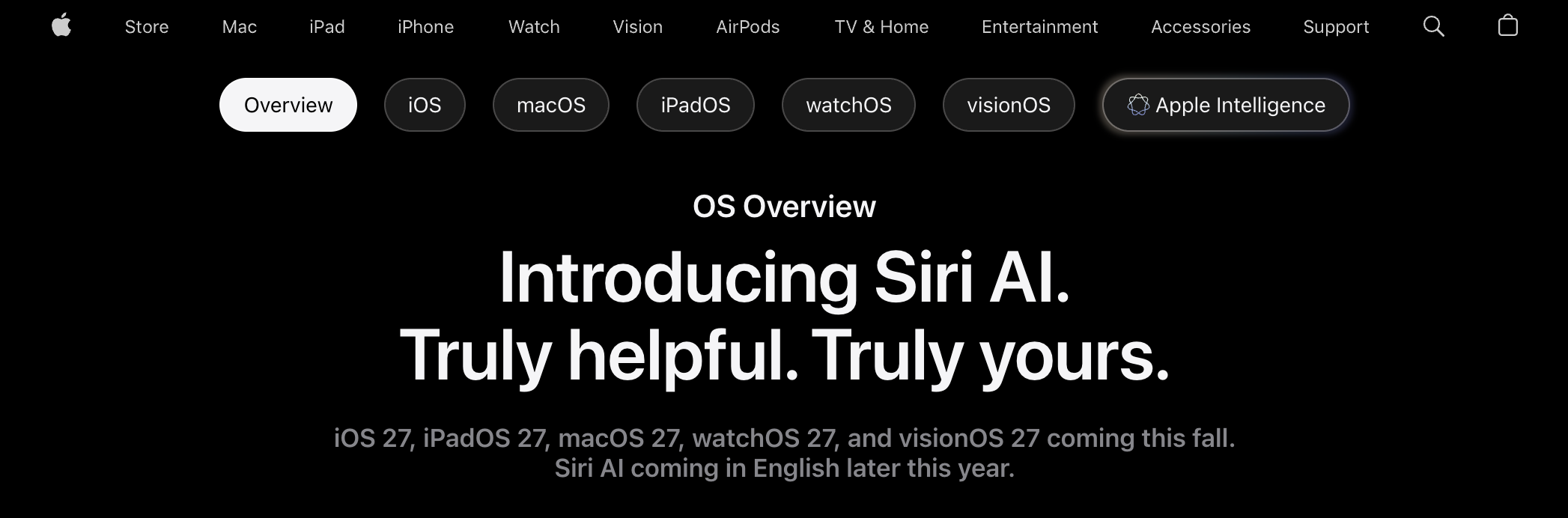
You can see this strategy reflected on Apple's website. While you can technically still filter the preview pages by operating system, the individual pages are nearly identical, and the main page (apple.com/os 👀) talk about the "OS Overview". And honestly, I don't blame them. Over the past year, I've reverted to just saying OS 26 when talking about Apple's platforms.
appleOS?
My podcast co-host, Christopher Lawley, has pushed the idea that Apple is moving toward something like appleOS, a unified operating system that runs across phones, tablets, laptops, and desktops. I can already see some readers searching for the famous screenshot of Craig Federighi saying "no" to this concept (saved you a search), but I think the idea is less crazy by the day. I'm still skeptical this will happen anytime soon, but I think it's plain to see for anyone paying attention recently that the unique aspects of each platform are being reduced as the company normalizes UI and interactions across everything that it can.
I also can't not bring up the elephants about to enter the room this year, which are Macs that you can interact with like iPads and iPhones as big as iPads.
This brings me back to my most controversial prediction of 2026 so far, where I argued that the iPadOS name would eventually go away and both iPhones and iPads would simply run iOS. Of course, you can go to Apple's website today and see that iPadOS 27 is indeed a thing, so they are not killing the name this year. Still, I am not willing to admit defeat just yet.
If we look back at Apple's history, the operating system that iPads run has changed names several times. The first instance was notably just a year into the product's life cycle, as the original iPad shipped running iPhone OS. It was not until the following year that they renamed the operating system to iOS, which better aligned with the idea of software running across multiple device types.
If history repeats itself and they eventually make the move I expect, I think there is a chance that at next year's WWDC, Apple will announce this change and point to their updated hardware lineup, which again features iPhones as large as iPads and Macs that you can use with touch. We will have to see if this presentation format continues, but if they do make this name change next year, it is entirely possible they won't even mention it in the keynote. It might be something we only learn when we visit Apple's site afterward and notice the iPadOS section has quietly disappeared. There is definitely some smoke here, and while I am not entirely sure what it indicates, Apple is clearly de-emphasizing platform names and differences.
A State of the Union for us nerds
As one final note, I think the thing that made this WWDC feel a little flat for people like me is that the segment on software updates was incredibly short. Typically, we get an hour and a half of updates detailing all the usability improvements made to the platforms. This time, we got it all blended together in a single 11-minute segment.
I don't think the blending itself is a problem, but it was so brief that I felt like I didn't come out of the keynote knowing how my phone or Mac would actually feel different in daily use. As is tradition, Apple posted their Developer State of the Union shortly after the keynote ended, which dove into a bunch of technical details for developers. It almost made me wish they would also host a "State of the Union for Nerds," where they would spend another hour diving into all the little details, tweaks, and quality-of-life changes they made to their platforms. We lost that detailed exploration in the main keynote this year, and it would have been a lot of fun to have a dedicated space for those smaller updates.